
Home Kitchen
5 knives + rod + 7-slot blockSave 10% against buying the 5 knives, a sharpening rod, a 7-slot block and Damascus scissors separately. Free US delivery.
Everything the kitchen and the table need.
The complete Ember kitchen: five knives, a 7-slot block, a sharpening rod and Damascus kitchen shears. An excellent gift for every occasion like newlyweds, birthdays, Christmas and more.
30-day returns. Cook and use it first, then decide.
Warranty covers qualifying manufacturing defects.
Free US delivery over $125. Most orders arrive within 5 working days.
Sold out · back soon

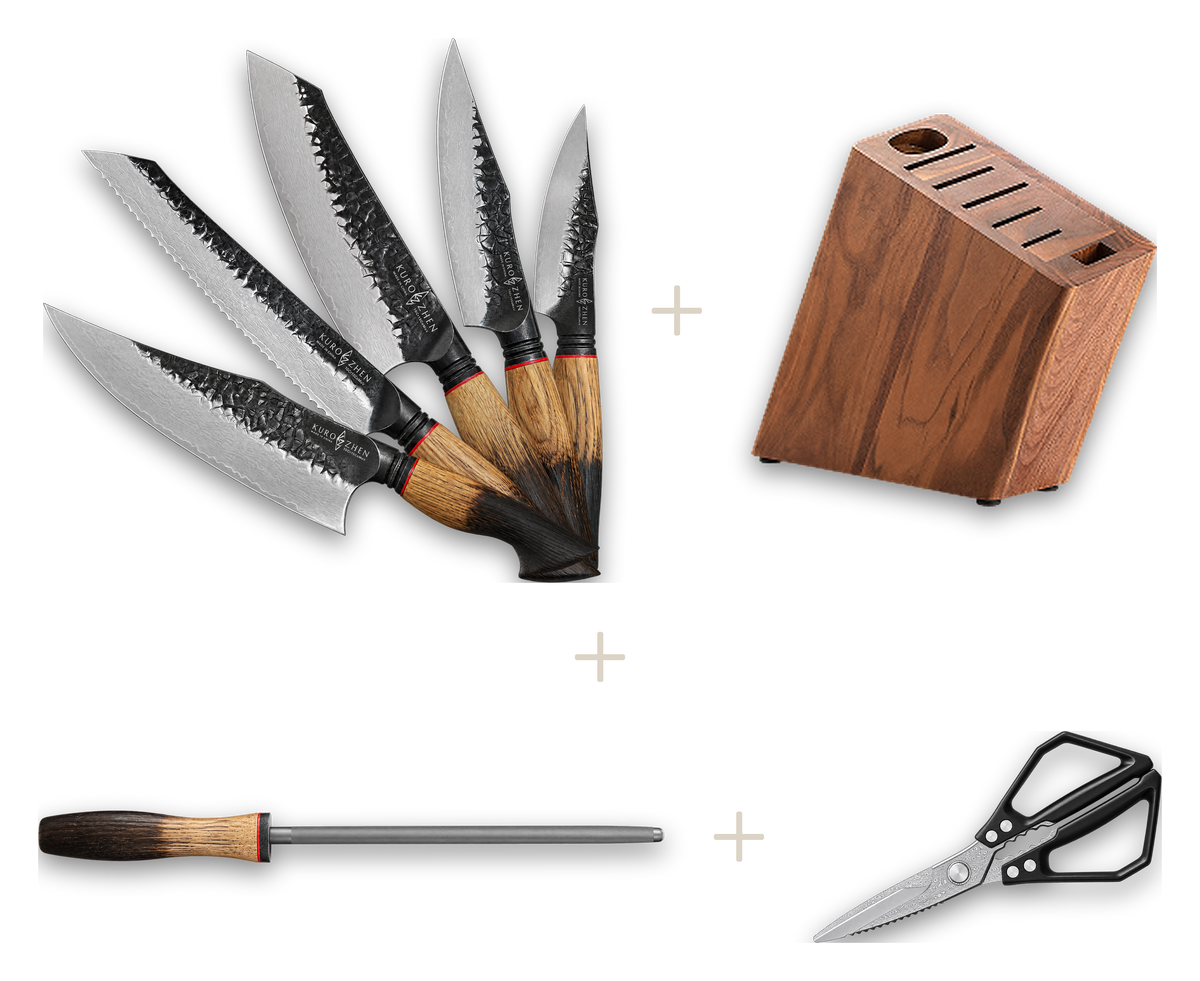
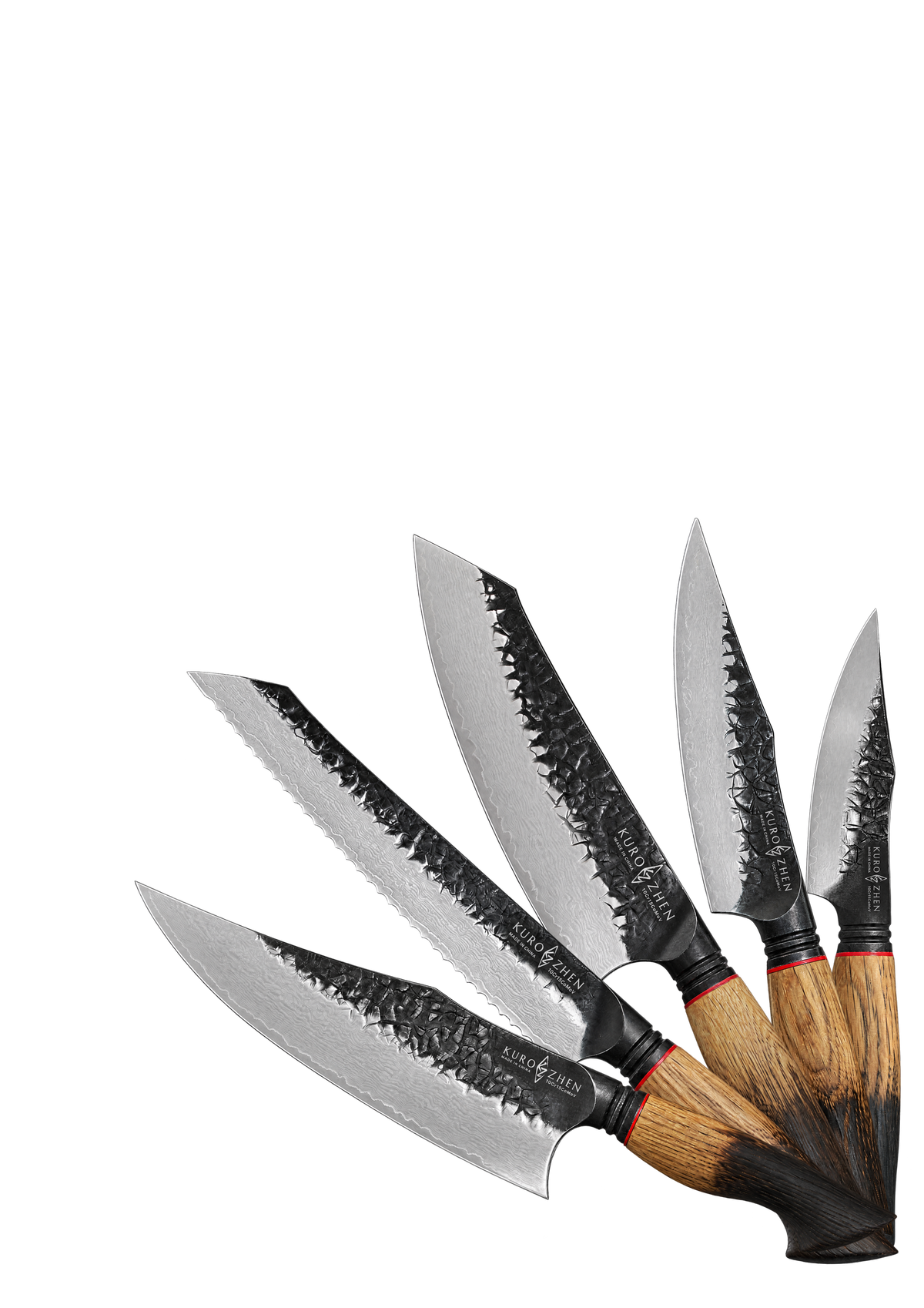

5 knives
Chef, bread, santoku, utility and paring.
67-layer Damascus · 60 ± 2 HRC
A cobalt-bearing 10Cr15CoMoV core, vacuum heat-treated and deep-frozen.
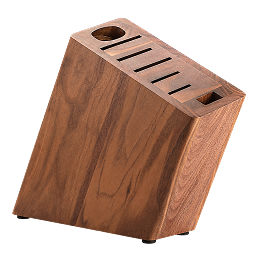
7-slot walnut block
Angled slots protect every edge; non-slip base.
Save 10% as a bundle
Less than buying every piece separately. Free US delivery.
Why this knife
Everything the kitchen and the table need.

Materials
what it is made of
We name our steel and publish our hardness.
Core and edge construction
- 33 Layers Of 316L stainless / Special Martensitic stainlessouter layer
- 10Cr15CoMoV core60 ± 2 HRC cutting edge
- 33 Layers Of 316L stainless / Special Martensitic stainlessouter layer
Core steel
10Cr15CoMoV
Cobalt-bearing stainless, the same class as Japan's VG-10. The name is the recipe:
Hardness · Rockwell C
60 ± 2 HRC
Noticeably harder than most Western knives, so the edge stays keen longer between sharpenings, and still sharpens easily at home.
HRC → harder
Handle
Burnt White Oak + Red G10
Dark and weathered at the base, warm wood underneath, with a rugged look that matches a blade built for the fire.
Finish
Hammered Damascus
A rough, torn texture that catches light unevenly, closer to forged metal than polished steel.
How to use it
made for the board
Best for
- Chef knife, 8": slicing tomatoes and onions, chopping vegetables and herbs, mincing garlic, slicing boneless meat and fish
- Bread knife, 8.5": crusty loaves, soft bread, cakes, tomatoes
- Santoku, 7": slicing and dicing vegetables, fine herbs, boneless chicken and fish, and thin slices of cheese
- Utility knife, 5": fruit, sandwiches, trimming meat, shallots and small vegetables, and slicing cured sausage or cheese
- Paring knife, 3.5": peeling, coring, hulling, fine detail work
- Sharpening rod: light honing before each cooking session
Avoid
- Chef knife, 8": bones, frozen food, hard squash rinds you must pry through, and glass, stone or ceramic boards
- Bread knife, 8.5": frozen bread, bones
- Santoku, 7": a heavy rocking motion, bones, frozen food and hard boards
- Utility knife, 5": large vegetables that need a long blade, bones, frozen food and hard boards
- Paring knife, 3.5": board work, hard rinds
- Sharpening rod: pressing hard or honing at the wrong angle
Care
- 01Hand wash and dry at once.
- 02Use a wood or soft synthetic board, never glass or stone.
- 03Hone with the Ember sharpening rod: 4 to 6 light strokes per side at about 15 degrees, before you cook.
- 04Keep the knives in the 7-slot block; dry each one before it goes back.
- 05The serrated bread knife needs only occasional professional sharpening.
In the box
what arrives at your door
Everything inside, piece by piece.


A note from our founders
“The kitchen is where a home comes alive. Meals start there, and people stay there long after the plates are cleared.”
We started KuroZhen because the knife is at the centre of that room. A good knife is the one you reach for every day. It should feel right in your hand, and you should know what it is made of.
So we name our steel, we publish our hardness and we tell you where our knives are made: Yangjiang, China, a city that has made blades for more than 1,400 years. Kuro is Japanese for black. Zhen is Chinese for precious. We hope your knife becomes both.
The KuroZhen founders
FAQs
what to know about ember
Still unsure? Email support@kurozhen.com. We are happy to help you choose the right knife, or the right gift.